Showing posts with label Safety. Show all posts

12/06/2010

Avalanche Safety Field Day 1

Posted on
On Friday my Avalanche Safety class spent the day hiking in the back country. We met at 9am in a town (more like a small collection of houses behind Keystone in the boonies) called Montezuma, and went over the day's itinerary and checked safety gear. We then split up into three groups with three different instructors and began our hike up the switchback's of Webster Pass. To say the least, this isn't a good class for someone who isn't in remotely good shape. We were out for a total of 6 hours, and around 4 1/2 of those hours was hiking up a snowy mountain.

We were hiking through the woods and our instructors were pointing to other peaks across the valley from us, explaining the different avalanche paths and the current conditions. It was interesting observing them from afar, but it really hit home when we came to our first avalanche path on our trail. The thick forest abruptly turned to a 100+ yard wide field of nothing but snow. We executed safety procedures by crossing one at a time, and it was crazy how long it took each person to get to the other side. As I crossed I took a picture looking up the path, and as you can see it starts at the peak of the mountain. The mass of this path was astounding, and it was an extremely humbling and nerve-racking feeling to hike across it.


We continued hiking and all of a sudden hear a "BOOM" with a rumbling in the distance. My instructor, who was directly in front of me, turned around in horror. After a few seconds we realized it was thunder, but it definitely freaked us out! After a mile or two my group stopped to dig some snow pits. Snow pits are dug to research the soundness and strength of the surrounding snow layers. Every snowfall leaves a different layer, and because there are so many types of snow, every layer is different. Avalanches occur for a number of different reasons, but what an avalanche is, is the failure of one or more weak layers in the snow pack, called facets. By doing a number of different strength tests on the snow pack, we were able to determine if there is any faceting, where it is, how it's going to react to pressure, etc. We also learned about the reactions of different combination's of layers, such as hard layers on top of weak layers.

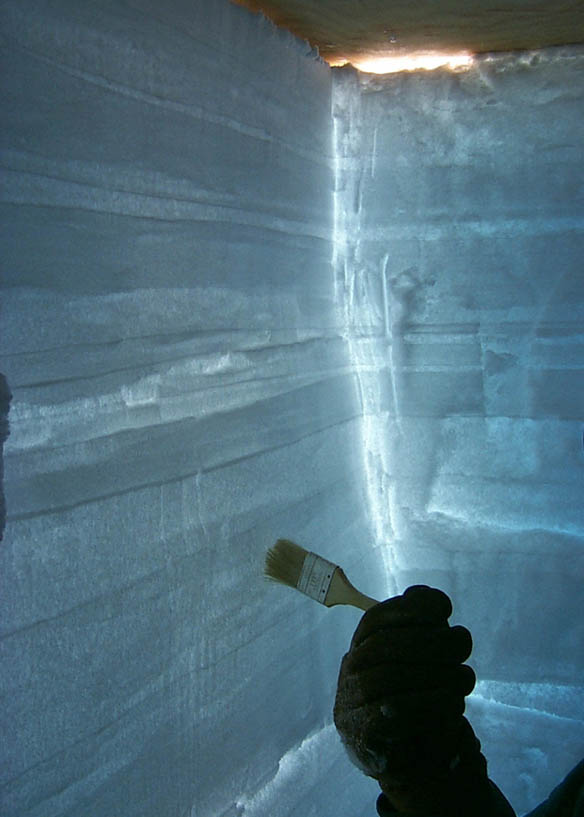
(Not a picture from our actual hike because flat light made it hard to get good pictures of the layers. )

We then kept hiking up, observed a few more avalanche paths, and finally stopped for lunch. After lunch we continued up the mountain and stopped to do more digging. Instead of digging a pit this time, we cut out 2x2 meter blocks in a few different spots. By doing this we were able to have a skier stand on top of the blocks to test the real strength of the snowpack and possibly create a mini-avalanche.

HAHA! Look how deep that snow is!


It was really windy, and I was really chilly!

It was a really eye-opening day, and it made me realize how real avalanches are. Unfortunately an avalanche took it's 2nd victim of the season in Colorado yesterday, and it's only December 6th. Read the article here.

12/01/2010

Thanksgiving and Avalanche Safety!

Posted on
Well, my Thanksgiving pictures are a little late. But better late than never, right? Thanksgiving was super fun this year. We had it at our house and we cooked the Turkey and a bunch of food. We had over another house of our friends so there was about 10 of us, quite smaller than my Thanksgiving last year. I think the biggest difference from last year was that last year it was about 20 guys, me, and one other girl. This year it was 8 girls and 2 guys!

(Sorry they're not the most high quality pictures, they're all taken from my iPhone.)


On Monday I had my first 4-hour avalanche safety class to get Avalanche Safety Level I Certified. That class we talked more about weather than avalanches, because of course without weather, you can't have avalanches. We learned a lot about forecasting: Wind direction, what causes snow, different types of snow, etc. We learned about fatality rates with and without safety gear and other statistics. Frighteningly, we also learned that Summit and Aspen are the most dangerous locations in North America for avalanches, for a number of reasons. It was extremely interesting, and I'm very excited for my next class tonight!

Then on Friday we have our first field day in the back country, thank God the weather is going to be nice! We are going to hike up Webster Pass in Montezuma, a little town hiding behind Keystone. Webster Pass is an old mining road that I've actually off-roaded on in the summer, that has access to some awesome back country in the winter... which is also very avalanche prone. We were told to bring all our hiking gear, a shovel, a lunch, and even toilet paper!

Next Friday is our second field day off of Hoosier Pass, which is the road that leads south of Breckenridge, from Blue River to Alma. I'm assuming this is going to be the sketchier of the two days, seeing as we were told we were not allowed to go if we showed up without a beacon. Then after the day is over we go back to Breckenridge for our written test.

I'm really glad I took this course, and I highly recommend it to everyone who skis or snowboards. I have a phone interview with Vail Resorts tomorrow for a weekend job in ticket sales. I'm really hoping I get it just so I can afford a beacon this season... I'm now learning just how important they are! There have been two fatalities in North America for avalanches already this season. The first I have already mentioned in a previous entry. The second was a snowmobiler in Utah. Him and his friend had safety gear with them but decided to leave it in their car because "they weren't going to be doing anything dangerous." One of them ended up being buried in an avalanche only two feet deep and suffocated. Had he had his beacon, he would have walked away fine.

10/28/2010

Blue Skies

Posted on
I woke up this morning to a beautiful blue sky and a sea of white waves. The three day storm is finally over, and ended up dropping a total of 29" here in Breckenridge! On Monday only the peaks had a little bit of snow, and now here's a picture from 8am this morning.


Yesterday I drove me and my roommates up to A-Basin for a pow day, here's a picture Rachel took on the way up!

It's safe to say Colorado is making up for the poor snow season last season and late start to this one. What an amazing season this is going to be!!! I had money saved up last year that I put in a "fun account", and I finally spent it on some much-needed snow gear. It's going to be a season with way above average snowfall and way below average temperatures. If you're a new rider in Colorado or a parent with a kid in Colorado, here are some fantastic gear ideas.

What I bought:

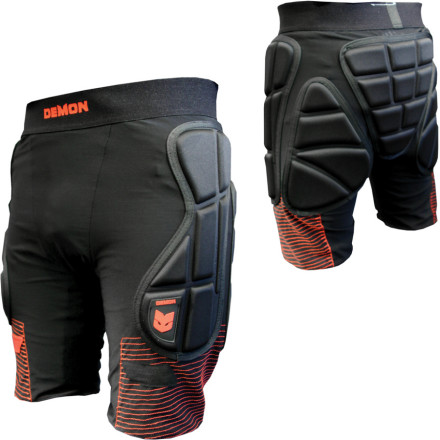
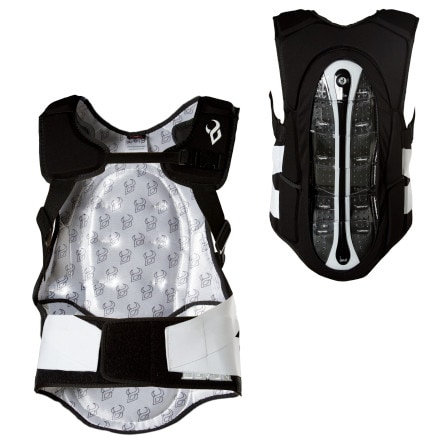
Demon Snow Impact Shorts: $55.00
This is the unisex version of Demon Snow's impact shorts. These are great for any season... and I should have invested in these a long time ago. I was going to get the female version, but these offer a lot more hip protection, which is mainly where I need it. If you don't want this to happen, get a pair!
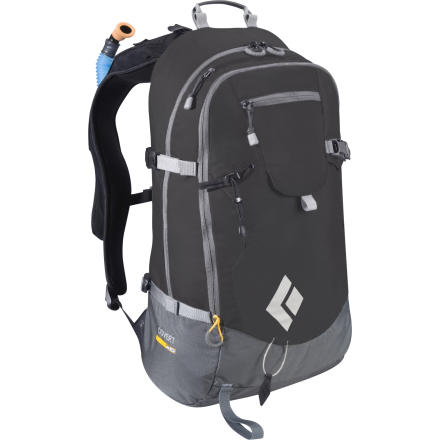
Black Diamond Covert Avalung: $220.00
The most money I have ever spent on something I hope I never have to use. If you like to go out of bounds into the back country or hike up peaks, this is a must-have. For some odd reason I have noticed a large amount of riders who have beacons (mentioned later), but not avalungs. The average time it takes to find and dig out someone in an avalanche is about 20 minutes, and without an avalung you can only survive being buried for 15 minutes. What's the point of having a beacon if they're going to find you dead? An avalung allows you to breathe for 60 minutes, and also doubles as a backpack for all your gear.

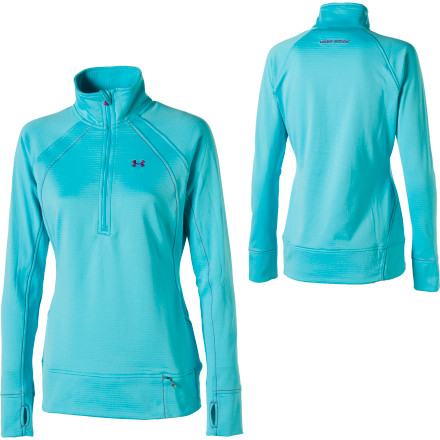
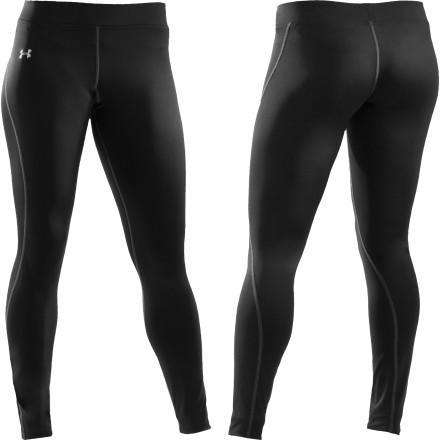
Under Armour Cold Gear: $50 - $70 each
It is going to be a CHILLY season. If you like to stay warm and dry without looking like the Michelin Man, invest in some mid to heavyweight base layer gear.


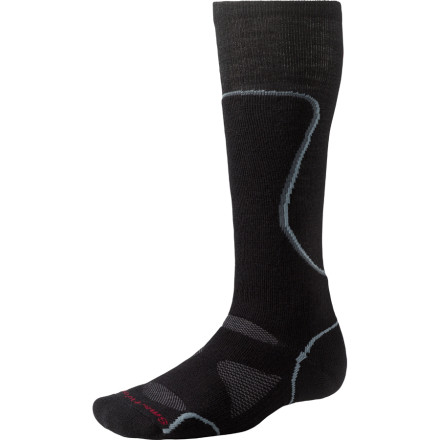
Midweight PhD SmartWool Socks: $20 a pair
Until SmartWool, I never found socks that could keep my feet warm enough. Not only do they keep you warm and dry, they have extra padding where your feet need it most. My parents bought me a few pairs for Christmas last year and I still think that was the best present ever. ($20 a pair may sound expensive, but I think diamond earrings and designer purses are expensive... and useless!)


OTHER GEAR

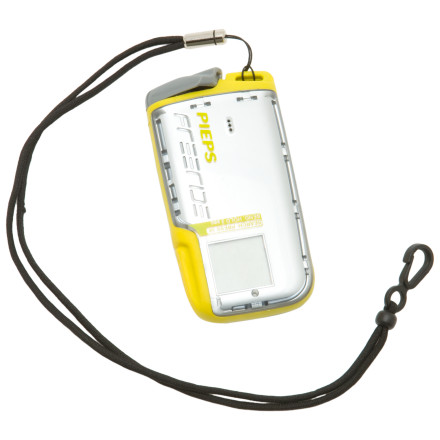
Avalanche Beacon: $200 - $550
A beacon is a device that's strapped to a skier/ snowboarder/ snowmobiler underneath their jacket. If you get buried in an avalanche it acts as a personal locator, and will help rescuers and/or your friends find you a lot faster than they would without one. As soon as I get a job this is going to be my next investment.
Other Impact Clothing: $20 - $120 +
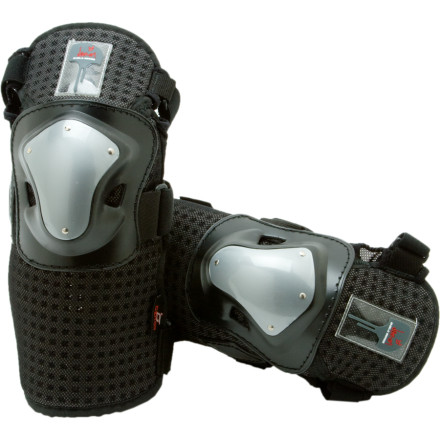
Again, great for any season. It really depends if you ski or snowboard and how you're most prone to falling. My roommate Rachel just purchased the knee/shin pads below... last season she had a bone-deep gash on her leg that needed stitches. Unfortunately it usually takes a good accident before we want to invest in protection. In words of wisdom... buy it before you hurt yourself.


3/11/2010

Backcountry Safety

Posted on
A 20 year-old was killed in an avalanche yesterday a mile west of A-Basin. He moved out here in November from Spring Grove, IL to work at Breckenridge Ski Resort. Him and his two other friends did not have any back country gear. Colorado has some of the most unstable snow pack in the world because of low moisture content and wind. With the heavy snow fall in March followed by spring-like temperatures in April, it makes it even more dangerous.

Most of us live here because our passion is skiing and snowboarding. I, myself, am always willing to spend money on new skis, boots, etc if I need them, because this is what I live for, and I know a lot of other people feel the same way. What I don't understand is how some people can have 6-7 different pairs of skis and no back country gear (that is unless you don't wonder out of bounds). Yeah, it's expensive, but it will save your life. I don't have the means this season, but next season I hope to start acquiring my own gear. Until then, I will use friends gear or not go out of bounds, period. (Even though there's a chance it can happen in bounds, too.) Riding in the Rockies is not a joke.

Here's a list of general back country essentials. You can find all of them at www.backcountry.com.
You can also buy avalanche survival packages.

1. AVALUNG ($100-$300)
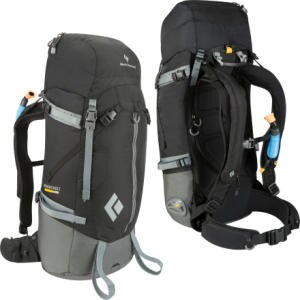
If you want to survive an avalanche, you better have an avalung... or chances are you won't. It's a pack that holds oxygen and allows you to breathe while waiting for rescuers to dig you out. There are two kinds, one is small and can be worn on your chest, and another includes a backpack.


2. BEACONS ($180 - $450)
An avalanche beacon, also known as an avalanche transceiver, are used to find buried people under the snow. If you are buried, rescuers (whether that's your friends or ski patrol) can use their beacons to send signals to yours to locate you. It's very important for everyone on the excursion to have one. It does no use if someone buried doesn't have one and someone unburied does. A beacon can greatly reduce the time in which you are buried, or will get you rescued when you may have never been found at all.


3. SHOVEL ($20 - $80)
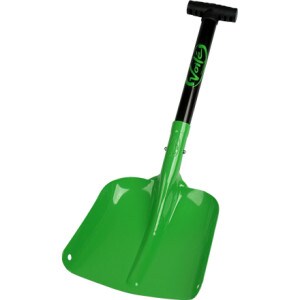
Small, light, and sturdy, the shovels are made for backcountry excursions. They're short enough to be able to put in to your pack, or attach to the back, and light enough that won't even know they're there. It's not only good for greatly reducing the time your friends are buried under the snow, it's also good for helping you build those back country kickers.


4. SKINS ($100 - $200)
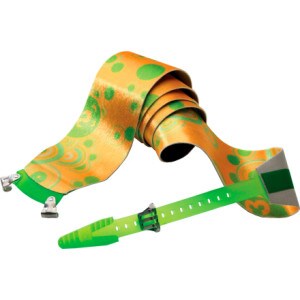
Skins are long strips of synthetic material (formerly animal hides) that are attached to the bases of skis for uphill climbing. The skins run smoothly over snow in a forward direction, but have texture that prevents the skis from sliding backwards. I would personally chose skins over snowshoes any day. You don't have to carry your skis on your back up the mountain, and you don't have to carry your snowshoes on your back down it. It saves a lot of energy and time.

5. Snowshoes ($100 - $300)
Whether you're a snowboarder or a skier who isn't a fan of skins, snowshoes make life a whole lot easier when the snow is thigh deep (and I can tell you that from first-hand experience). Snowshoes have been around for thousands of years and make deep snow trekking a breeze. Snowshoes distribute your body weight over a much larger space than your foot, giving you the ability to "float".

6. Multi-Tool ($15 - $150)
My dad bought me one of these when I was younger, I still to this day have it, and use it at least once a day. Never in my right mind would I go on an excursion without it. You can buy them in a miniature pocket size, or a standard hand held size. 


7. Heatsheet ($4.99)
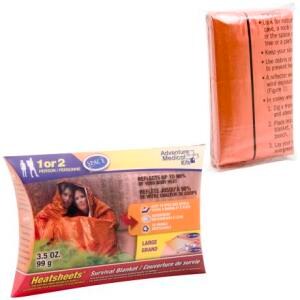
The Adventure Medical Heatsheets Two Person Blanket reflects 90% of your body's heat to help keep you and your buddy warm through an unexpected emergency. It's 2.8-ounces, it's bright orange so you can be easily spotted, and it's $4.99. If that's not good enough reason to buy one, you might deserve to be cold.


8. Lighters ($1.00)
I've had people argue with me that a lighter won't last forever, won't work if its wet, and that you should learn how to start a fire without one. All of those statements are true, but here's my theory. Once you start a fire, you can pretty much keep it going indefinitely... Unless a huge storm were to hit. It only takes one short flame to start a fire, and that won't use much fluid. I have reason to believe I would expire before my lighters would run out of fluid. Besides, I rather be able to start a fire with zero effort and save it for other things.

9. Steel Water Bottle ($15 - $30)
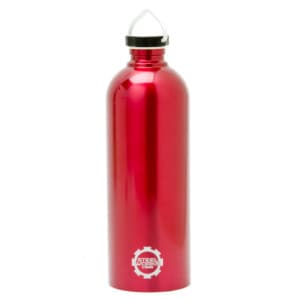
I know their are some plastic water bottles that are BPA free, but a plastic water bottle can't be held over a fire. It may seem like a fantastic idea to just eat snow to hydrate, after all, it is water. The problem with snow is that it's composition is at a 10/1 ratio. That means that one inch of rain will equate to roughly ten inches of snow. Basically, you'd need 160 inches of snow to get one bottle of water at 16 ounces (as picture below). The rate at which you will burn energy by eating the snow is more than that of what you will gain. If you hold a water bottle near a fire to get it warm (not hot, we don't want it evaporating, either) it's easy to keep stuffing snow in it until it's full.

I know I haven't mentioned food, or hunting for food... or anything like that. But if you aren't planning on going to an area where you could get rescued within 48 hours, chances are you shouldn't be coming to my blog for input, and you probably aren't ready for that, anyway.
 

 See What I See | Copyright © 2011