Showing posts with label Backcountry. Show all posts

3/12/2012

Avalanche Level II Certification

Posted on
You're standing at the top of a mountain after hiking 5 miles into the backcountry. It's a beautiful bluebird morning with mild temperatures, crisp air, and 8" of fresh snow from the night before. You and your best friend strap into your boards and play Rock Paper Scissors to see who gets to drop in first for the best run of your lives. You win - Must be your lucky day.

You drop in and the snow is incredible; The lightest, driest, most heavenly pow you have ever ridden in your life. You lean to make your third big swooping carve and "BAM!", a large crack rings out. You're swept off your feet at an alarming rate, and the surprise nearly takes your breath away. Before you're engulfed you get a glimpse of the mountain, and watch in horror as the entire face crumbles in all it's glory. You begin sinking and tumbling, but swimming is impossible because your board is strapped to your feet. The avalanche's path of choice is a rock garden, and the force of being slammed into one shatters your right arm. You gasp in pain and inhale a mouth full of snow. The snow fills every open cavity on your head, it doesn't discriminate body parts.  As the avalanche begins to slow, your relief quickly turns to horror as the light fluffy pow you were just riding solidifies to concrete. 

And then... there is silence; A silence so powerful it makes you nauseated. You want to fight, but you can't. You can't decipher up from down, you can't move, you can't breathe, you can't make a sound. Minutes pass by and you hear the cries of your dearest friend, running around frantically screaming your name. 

Tears begin to flow from your eyes and freeze them shut as your morning flashbacks in your mind. Ten feet from your car you realized you forgot your beacon, but you were too excited so you left it behind...

 And that my friends, is the harsh reality of an avalanche.

I have a lot to report on, but this entry is going to be dedicated to my Avalanche Safety II Course that I completed two weeks ago. It was the first year CMC and the CAIC (Colorado Avalanche Information Center) held the course as a college credit, and I feel SO lucky to have been apart of it. The first three days were spent inside and the last three days were outdoor field days. I apologize for the lack of pictures from the outdoor field days. We unfortunately had to spend them outside in near negative temperatures with 40mph negative temp winds and blowing snow... Gotta love blizzards!

*I have to give a shout out to our main instructor Dan Moroz (American Avalanche Association), other instructors Brian Taylor (Wilderness Rescue), Drew Gibson (Copper Ski Patrol), Thomas Creighton (Copper Ski Patrol), John Snook (CAIC) and John Reller (Copper Ski Patrol/ Avy Dog Trainer). I have the utmost gratitude and respect for all of you and greatly appreciate your willingness to educate us.

I wish I could put the whole course in this blog because it was such great info, but unfortunately there's just too much. The first few days we spent some time reviewing stuff from our level I course, as well as going a lot deeper into topics we already learned about, such as snowpack, rescue, etc. We got an awesome weather forecasting presentation by John Snook which I found so interesting. It kind of made me wish there was a meteorology class at CMC, I would definitely take it!


Read The Weather
We learned about different types of climates and how they affect snow pack, such as the Maritime, Continental, and Intercontinental climates. Maritime climates originate near oceans (Oregon, Washington), have the highest frequency of precipitation, and have a very wet and deep snow pack. Continental climates (Colorado) are characterized by a lot of wind, stormy periods followed by sunny weather, and have a very shallow snow pack. Intercontinental climates (Utah) are right in between.
(Not completely accurate. I threw it together as an example.)
We also learned that the amount of snow we could get from each storm depends on where it comes from. Unfortunately because of Colorado's location, we're usually unlucky. A polar climate is dry (because it's continental) and cold (because it's north). A colder climate carries less precipitation than a warmer climate. So when a storm comes from Canada, it's got nothin! When a storm from the Southwest comes, it could have a lot of precipitation... However, there are a lot of mountain ranges it will hit before us. A cloud is like a sponge and a mountain is like a wall. When you push the sponge into the wall, what happens? Precipitation!

Read Your Snowpack


There are three main factors that can cause avalanches.
Snowpack - What climate do you live in? Is it heavy and wet or light and dry? What layers are in your snowpack?
Terrain - What type of terrain are you riding? 95% of avalanches occur on angles between 37-42 degrees. Rocks and trees can make snow weaker in continental climates, but trees can act as anchors in maritime climates.
Weather - Regular big storms can start an avy cycle and flush out facet layers. Wind causes cornices (a build up of snow on the leeward side).


What exactly causes an avalanche? Weak layers in the snow. Sometimes there are many weak layers, sometimes there's only one but it's thick and at the very bottom. There is no way to know what the layers are in your snow unless you DIG A PIT! There are a lot of different tests you can do- A propagation saw test, an extended column test, etc, etc. You don't have to learn them all to be safe in the backcountry though. Dig a pit and just feel for weak layers. If you can easily stick your fist or (worse yet) arm into your pit and it crumbles to pieces, get your butt up and hike out the way you came!

Read The Warnings
No matter what weather intermediary you use, there will always be avalanche warnings - Read them, and listen to them. The recent tragic loss of three ski pioneers outside of Mt.Baker happened during an avalanche danger rating of high. The mountain doesn't care who you are, nor does the snowpack.


The Colorado Avalanche Information Center has very accurate, up-to-date, and specific avalanche forecasting, as well as avalanche observations and accidents, weather forecasting, and other education tools. The CAIC uses the "Danger Rose" for their avalanche warning scale. The center is the peak of the mountain, the middle rim is at tree line, and the outside rim is below treeline. It's also a compass - The East side of the mountain could be more dangerous than the West.


Think this is a lot? I haven't even touched the surface!!

One of our classroom days the instructors went out and made an "avalanche accident scene" in the snowbank in the parking lot. A snowbank is a great spot to train because the hard consistency of plowed snow is much like that of avalanche debris. Our instructors acted very frantic because their friends were buried and everyone's responses really got the adrenaline flowing.


Recco, the avy dog pictured above, joined us for a few of our indoor class days and her buddy Race joined on Friday when we got an awesome presentation from John Reller about avalanche dogs. They're totally not lovable and totally not well behaved... as you can see in the pics below.


Friday was one of our field days. We went up to Hoosier Pass between Breckenridge and Alma. It was absolutely freezing... on top of snowy and windy. We worked on finding multiple burials with beacons (where as in level I we just did a single burial). We also had another avalanche accident scene and had to find dummies with and without beacons using our beacons and probes. Then we went and dug snow pits... I was BLOWN AWAY by how weak the snow pack was. The bottom layer against the ground was a good 6" thick and was the weakest snow in existence (called surface hoar or facets). Our pits were failing at the lowest level possible, which would be a massive slab avalanche if it were one. It was really crazy to see first hand how unsafe the snow is this season.

Saturday we went to Webster Pass and split into three groups. My group leader Dan Moroz brought us to what you could call the worst city planning in history. It was a back-in-the-boonies neighborhood literally built along side a massive avalanche path. He said he talked to some of the home owners during an avalanche and their experience was unreal: All of a sudden all the doors in their house flew open, they heard a loud, roaring, rumble, and then all the doors slammed shut. Talk about a pressure change!!

See the house to the upper right of Dan's head? CRAZY!!!!  
Then we ventured and looked at other avalanche paths... Some of which we had to cross (one at a time I might add).


Unfortunately I had to miss Sunday, which was just a short tour up  St.John's road in Montezuma... But I'm going to stop this blog here anyway, it's getting long!! Moral of the story: If you live in the mountains, get educated on your snow pack... It'll save your life.

1/20/2011

Backcountry and Big Air

Posted on
The last few days Breckenridge has gotten a few feet of snow, and I've really REALLY been enjoying the back country. My favorite spot for back country is... Well, I'd tell you where it is but then I'd have to kill you. I will say that it's convenient because it's near Breckenridge, so I've been cutting over in-bounds to ride one of Breck's lifts up instead of hiking up, ha! It's been absolutely amazing back there the last few days... So much snow and NO people! Today was beyond amazing because it was a bluebird day after a snowstorm. It just doesn't get any better than that. Here are a bunch of photos I took. (These are definitely photos you want to click on for a bigger view. The small view just doesn't do justice... but then again, neither do pictures.)


Next week Tuesday and Wednesday is the first ever Denver Big Air Competition. A massive ramp is being built in the heart of Denver for a professional ski and snowboard competition. Here's a computer animation of what it's going to look like:


Here are some recent photos that were taken during construction

Saturday through Monday I will be working on the ramp helping sculpt the snow etc. I'm very nervous and excited! On Tuesday is the Ski Competition and on Wednesday is the Snowboard Competition. Both are followed by music concerts. It should be awesome!

12/06/2010

Avalanche Safety Field Day 1

Posted on
On Friday my Avalanche Safety class spent the day hiking in the back country. We met at 9am in a town (more like a small collection of houses behind Keystone in the boonies) called Montezuma, and went over the day's itinerary and checked safety gear. We then split up into three groups with three different instructors and began our hike up the switchback's of Webster Pass. To say the least, this isn't a good class for someone who isn't in remotely good shape. We were out for a total of 6 hours, and around 4 1/2 of those hours was hiking up a snowy mountain.

We were hiking through the woods and our instructors were pointing to other peaks across the valley from us, explaining the different avalanche paths and the current conditions. It was interesting observing them from afar, but it really hit home when we came to our first avalanche path on our trail. The thick forest abruptly turned to a 100+ yard wide field of nothing but snow. We executed safety procedures by crossing one at a time, and it was crazy how long it took each person to get to the other side. As I crossed I took a picture looking up the path, and as you can see it starts at the peak of the mountain. The mass of this path was astounding, and it was an extremely humbling and nerve-racking feeling to hike across it.


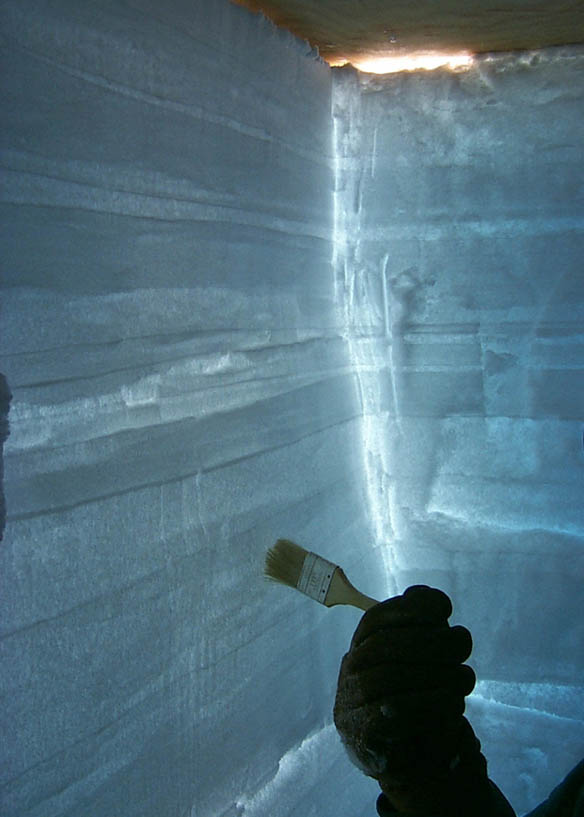
We continued hiking and all of a sudden hear a "BOOM" with a rumbling in the distance. My instructor, who was directly in front of me, turned around in horror. After a few seconds we realized it was thunder, but it definitely freaked us out! After a mile or two my group stopped to dig some snow pits. Snow pits are dug to research the soundness and strength of the surrounding snow layers. Every snowfall leaves a different layer, and because there are so many types of snow, every layer is different. Avalanches occur for a number of different reasons, but what an avalanche is, is the failure of one or more weak layers in the snow pack, called facets. By doing a number of different strength tests on the snow pack, we were able to determine if there is any faceting, where it is, how it's going to react to pressure, etc. We also learned about the reactions of different combination's of layers, such as hard layers on top of weak layers.


(Not a picture from our actual hike because flat light made it hard to get good pictures of the layers. )

We then kept hiking up, observed a few more avalanche paths, and finally stopped for lunch. After lunch we continued up the mountain and stopped to do more digging. Instead of digging a pit this time, we cut out 2x2 meter blocks in a few different spots. By doing this we were able to have a skier stand on top of the blocks to test the real strength of the snowpack and possibly create a mini-avalanche.

HAHA! Look how deep that snow is!


It was really windy, and I was really chilly!

It was a really eye-opening day, and it made me realize how real avalanches are. Unfortunately an avalanche took it's 2nd victim of the season in Colorado yesterday, and it's only December 6th. Read the article here.

12/01/2010

Thanksgiving and Avalanche Safety!

Posted on
Well, my Thanksgiving pictures are a little late. But better late than never, right? Thanksgiving was super fun this year. We had it at our house and we cooked the Turkey and a bunch of food. We had over another house of our friends so there was about 10 of us, quite smaller than my Thanksgiving last year. I think the biggest difference from last year was that last year it was about 20 guys, me, and one other girl. This year it was 8 girls and 2 guys!

(Sorry they're not the most high quality pictures, they're all taken from my iPhone.)


On Monday I had my first 4-hour avalanche safety class to get Avalanche Safety Level I Certified. That class we talked more about weather than avalanches, because of course without weather, you can't have avalanches. We learned a lot about forecasting: Wind direction, what causes snow, different types of snow, etc. We learned about fatality rates with and without safety gear and other statistics. Frighteningly, we also learned that Summit and Aspen are the most dangerous locations in North America for avalanches, for a number of reasons. It was extremely interesting, and I'm very excited for my next class tonight!

Then on Friday we have our first field day in the back country, thank God the weather is going to be nice! We are going to hike up Webster Pass in Montezuma, a little town hiding behind Keystone. Webster Pass is an old mining road that I've actually off-roaded on in the summer, that has access to some awesome back country in the winter... which is also very avalanche prone. We were told to bring all our hiking gear, a shovel, a lunch, and even toilet paper!

Next Friday is our second field day off of Hoosier Pass, which is the road that leads south of Breckenridge, from Blue River to Alma. I'm assuming this is going to be the sketchier of the two days, seeing as we were told we were not allowed to go if we showed up without a beacon. Then after the day is over we go back to Breckenridge for our written test.

I'm really glad I took this course, and I highly recommend it to everyone who skis or snowboards. I have a phone interview with Vail Resorts tomorrow for a weekend job in ticket sales. I'm really hoping I get it just so I can afford a beacon this season... I'm now learning just how important they are! There have been two fatalities in North America for avalanches already this season. The first I have already mentioned in a previous entry. The second was a snowmobiler in Utah. Him and his friend had safety gear with them but decided to leave it in their car because "they weren't going to be doing anything dangerous." One of them ended up being buried in an avalanche only two feet deep and suffocated. Had he had his beacon, he would have walked away fine.

3/11/2010

Backcountry Safety

Posted on
A 20 year-old was killed in an avalanche yesterday a mile west of A-Basin. He moved out here in November from Spring Grove, IL to work at Breckenridge Ski Resort. Him and his two other friends did not have any back country gear. Colorado has some of the most unstable snow pack in the world because of low moisture content and wind. With the heavy snow fall in March followed by spring-like temperatures in April, it makes it even more dangerous.

Most of us live here because our passion is skiing and snowboarding. I, myself, am always willing to spend money on new skis, boots, etc if I need them, because this is what I live for, and I know a lot of other people feel the same way. What I don't understand is how some people can have 6-7 different pairs of skis and no back country gear (that is unless you don't wonder out of bounds). Yeah, it's expensive, but it will save your life. I don't have the means this season, but next season I hope to start acquiring my own gear. Until then, I will use friends gear or not go out of bounds, period. (Even though there's a chance it can happen in bounds, too.) Riding in the Rockies is not a joke.
Here's a list of general back country essentials. You can find all of them at www.backcountry.com.
You can also buy avalanche survival packages.

1. AVALUNG ($100-$300)
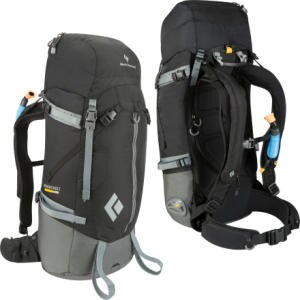
If you want to survive an avalanche, you better have an avalung... or chances are you won't. It's a pack that holds oxygen and allows you to breathe while waiting for rescuers to dig you out. There are two kinds, one is small and can be worn on your chest, and another includes a backpack.


2. BEACONS ($180 - $450)
An avalanche beacon, also known as an avalanche transceiver, are used to find buried people under the snow. If you are buried, rescuers (whether that's your friends or ski patrol) can use their beacons to send signals to yours to locate you. It's very important for everyone on the excursion to have one. It does no use if someone buried doesn't have one and someone unburied does. A beacon can greatly reduce the time in which you are buried, or will get you rescued when you may have never been found at all.


3. SHOVEL ($20 - $80)
Small, light, and sturdy, the shovels are made for backcountry excursions. They're short enough to be able to put in to your pack, or attach to the back, and light enough that won't even know they're there. It's not only good for greatly reducing the time your friends are buried under the snow, it's also good for helping you build those back country kickers.


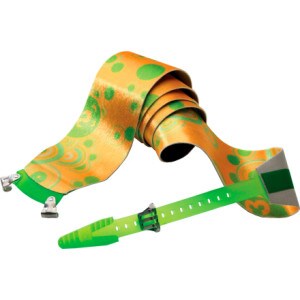
4. SKINS ($100 - $200)
Skins are long strips of synthetic material (formerly animal hides) that are attached to the bases of skis for uphill climbing. The skins run smoothly over snow in a forward direction, but have texture that prevents the skis from sliding backwards. I would personally chose skins over snowshoes any day. You don't have to carry your skis on your back up the mountain, and you don't have to carry your snowshoes on your back down it. It saves a lot of energy and time.

5. Snowshoes ($100 - $300)
Whether you're a snowboarder or a skier who isn't a fan of skins, snowshoes make life a whole lot easier when the snow is thigh deep (and I can tell you that from first-hand experience). Snowshoes have been around for thousands of years and make deep snow trekking a breeze. Snowshoes distribute your body weight over a much larger space than your foot, giving you the ability to "float".

6. Multi-Tool ($15 - $150)
My dad bought me one of these when I was younger, I still to this day have it, and use it at least once a day. Never in my right mind would I go on an excursion without it. You can buy them in a miniature pocket size, or a standard hand held size. 


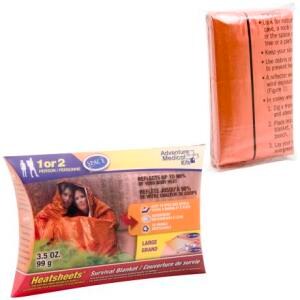
7. Heatsheet ($4.99)
The Adventure Medical Heatsheets Two Person Blanket reflects 90% of your body's heat to help keep you and your buddy warm through an unexpected emergency. It's 2.8-ounces, it's bright orange so you can be easily spotted, and it's $4.99. If that's not good enough reason to buy one, you might deserve to be cold.


8. Lighters ($1.00)
I've had people argue with me that a lighter won't last forever, won't work if its wet, and that you should learn how to start a fire without one. All of those statements are true, but here's my theory. Once you start a fire, you can pretty much keep it going indefinitely... Unless a huge storm were to hit. It only takes one short flame to start a fire, and that won't use much fluid. I have reason to believe I would expire before my lighters would run out of fluid. Besides, I rather be able to start a fire with zero effort and save it for other things.

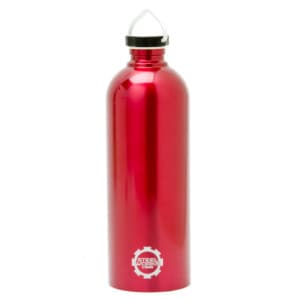
9. Steel Water Bottle ($15 - $30)
I know their are some plastic water bottles that are BPA free, but a plastic water bottle can't be held over a fire. It may seem like a fantastic idea to just eat snow to hydrate, after all, it is water. The problem with snow is that it's composition is at a 10/1 ratio. That means that one inch of rain will equate to roughly ten inches of snow. Basically, you'd need 160 inches of snow to get one bottle of water at 16 ounces (as picture below). The rate at which you will burn energy by eating the snow is more than that of what you will gain. If you hold a water bottle near a fire to get it warm (not hot, we don't want it evaporating, either) it's easy to keep stuffing snow in it until it's full.

I know I haven't mentioned food, or hunting for food... or anything like that. But if you aren't planning on going to an area where you could get rescued within 48 hours, chances are you shouldn't be coming to my blog for input, and you probably aren't ready for that, anyway.
 

 See What I See | Copyright © 2011